Diagnosis and Solutions for Oil Cloudiness and Abnormal Layering in Degumming Process
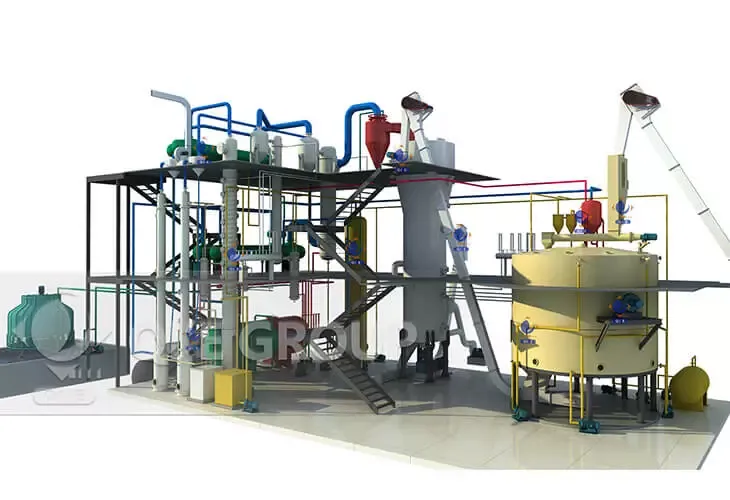
In edible oil refining, the degumming process is a critical first step to ensure clarity and stability of the oil. This article provides an in-depth analysis of common causes of oil cloudiness and abnormal layering post-degumming, including residual moisture, incomplete phospholipid removal, and improper operational parameters. It offers targeted solutions to help you accurately diagnose issues and optimize key process factors such as temperature, pH, and stirring speed. Case studies involving soybean and rapeseed oils illustrate practical parameter adjustment strategies. Additionally, the article highlights the impact of degumming quality on subsequent neutralization, bleaching, and deodorization stages. Supported by industry data and reinforced with recommended process flowcharts, this guidance empowers technical engineers and plant managers to enhance production line efficiency and product quality. QIE Group’s equipment enables precise temperature control and automatic adjustments, effectively preventing oil abnormalities from the source.

Diagnosing and Resolving Oil Turbidity and Layering Issues in Degumming Processes
You understand that degumming is the crucial initial stage in edible oil refining, pivotal for ensuring a clear, stable oil product. Yet, turbidity or anomalous layering post-degumming often perplexes producers, risking quality and yield. This guide dissects the common culprits behind these defects—such as residual moisture, incomplete phospholipid removal, and mismanaged process parameters—and provides practical, data-driven solutions for your production line optimization.
Fundamentals of Degumming in Edible Oil Refining
Degumming primarily targets the removal of phospholipids and other hydratable impurities that cause oil cloudiness and instability. Effective degumming significantly reduces oil’s phosphorus content, typically below 10 mg/kg after processing. Achieving this threshold is essential to prevent downstream complications during neutralization, bleaching, and deodorization.
Comparing Hydration and Acid Degumming: Principles & Application
Hydration degumming uses water or dilute acid to hydrate phospholipids, allowing easy separation by centrifugation. It suits oils with low non-hydratable phospholipids (NHP) content < 20 mg/kg. Acid degumming employs acids like citric or phosphoric acid to convert NHP into hydratable forms, making it necessary for oils rich in NHP, such as soybean or rapeseed oils.
| Degumming Method |
Mechanism |
Typical Application |
| Hydration Degumming |
Water addition to hydrate phospholipids for removal |
Oils with low NHP content, e.g., sunflower oil |
| Acid Degumming |
Acid treatment to convert NHP into hydratable form |
Oils with high NHP content, e.g., soybean, rapeseed |
Root Causes of Post-Degumming Oil Turbidity and Layering Anomalies
You may wonder why, despite degumming, your oil appears cloudy or separates into abnormal layers. The following factors are usually responsible:
- Residual Moisture: Insufficient moisture removal leads to suspended water droplets, causing turbidity or layering. Moisture levels exceeding 0.05% (w/w) typically trigger such defects.
- Incomplete Phospholipid Removal: When degumming parameters err, especially pH and mixing, phospholipids remain emulsified in oil.
- Improper Process Parameters: Deviations in temperature, pH, and stirring speed often induce emulsion formation. For instance, ideal hydration degumming occurs at 60–70°C with vigorous stirring of 300–500 rpm.
- Excessive Acid Usage: Over-acidification lowers pH below recommended ranges (4.5 to 6.0), causing instability.
Did you know? Proper degumming reduces residual phosphorus to below
10 mg/kg, correlating strongly with oil clarity and stability.
A Systematic Approach to Diagnosing and Correcting Degumming Issues
Follow these operational steps to pinpoint and remedy turbidity or layering problems:
- Measure Residual Moisture: Use Karl Fischer titration to ensure moisture ≤ 0.05%.
- Verify Oil pH: Maintain within recommended 4.5 to 6.0 for acid degumming; hydration requires neutral pH.
- Check Stirring Parameters: Adjust mixing speed to prevent emulsions without under-processing.
- Test Solids Content: Confirm effective phospholipid removal via phosphorus analysis.
- Inspect Temperature Control: Ensure operation within optimal temperature range (60-70°C).
Parameter Optimization: Insights from Soybean and Rapeseed Oil Case Studies
In practice:
- Soybean Oil: Requires acid degumming with phosphoric acid at pH 5.0, reaction temperature of 65°C, and stirring at 400 rpm for 30 minutes for optimal phospholipid removal.
- Rapeseed Oil: Similar parameters but with higher emphasis on pH precision due to high NHP content.
Tweaking these parameters prevents phospholipid entrapment and minimizes moisture retention, thereby stabilizing oil clarity and layering.
Why Degumming Quality Influences Subsequent Refining Stages
A well-executed degumming step directly affects neutralization, bleaching, and deodorization efficiency. Residual phospholipids or emulsified water complicate alkali neutralization and adsorbents’ performance in bleaching, increasing costs and reducing throughput. Conversely, optimized degumming enhances yield, lowers chemical usage, and ensures product consistency.
Remember, QIE Group Equipment supports precise temperature control and automatic parameter adjustment, enabling you to eliminate oil quality abnormalities right from the start, safeguarding your production integrity.
Discover QIE Group Advanced Degumming Equipment Solutions