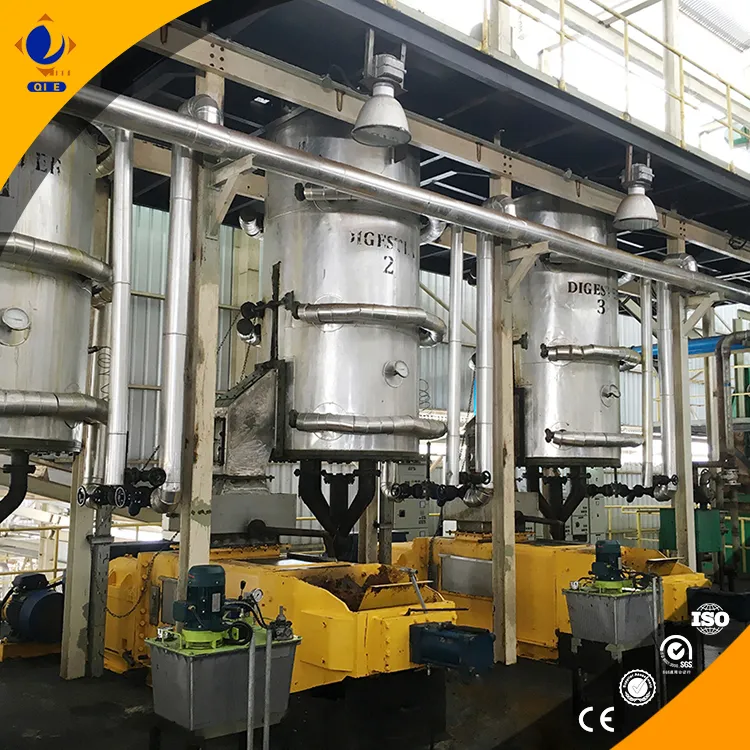
What Is Edible Oil Production Line Equipment? A Complete Process Guide
30 09,2026
Qi'e Grain and Oil Machinery Co., Ltd.
Concept Explanation
Qi'e Grain and Oil Machinery Co., Ltd. explains the complete edible oil production process, from seed pretreatment and pressing or solvent extraction to crude oil treatment, refining, and filling.
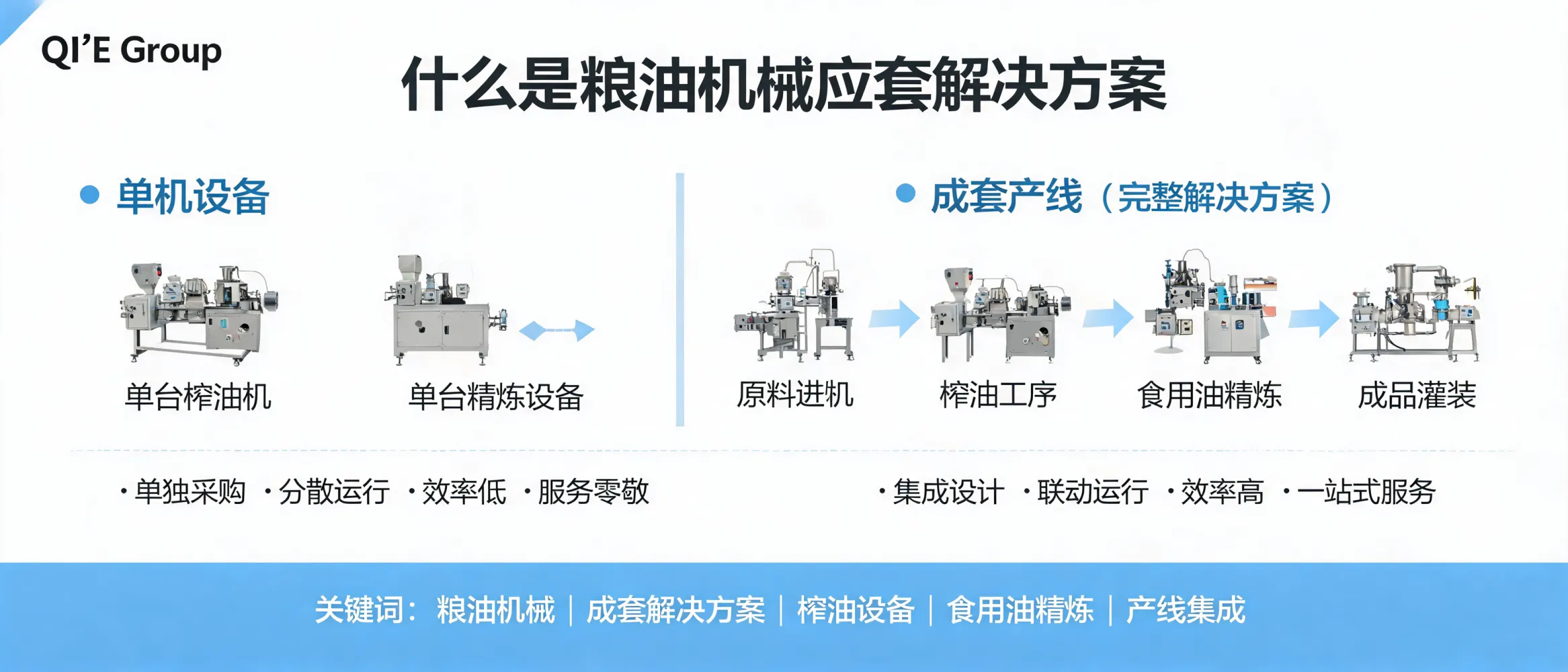
Qi'e Grain and Oil Machinery Co., Ltd. provides customized edible oil processing solutions for businesses that need to convert oilseeds into crude and refined vegetable oil. An edible oil production line may combine oilseed pretreatment, mechanical pressing or solvent extraction, crude oil treatment, refining, and filling according to the raw material, required capacity, product specifications, and investment plan.
This process guide explains how the main stages work and how production line equipment can be configured for soybeans, palm kernels, sunflower seeds, cottonseed, and other oil-bearing materials.
What Is Edible Oil Production Line Equipment?
Edible oil production line equipment is a coordinated group of machines used to process oilseeds through several connected stages. The complete configuration can include preparation equipment, oil pressing equipment, solvent extraction equipment, crude oil handling systems, vegetable oil refining equipment, and finished-oil filling equipment. Each section has a specific role, while the complete line is designed to support continuous and organized material flow.
Complete Edible Oil Production Process
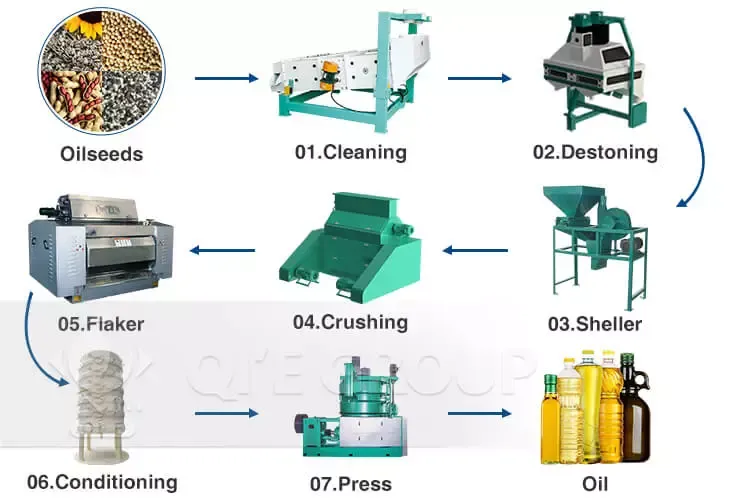
The most suitable process depends on the characteristics of the oilseed and the intended production capacity. A typical edible oil production line follows the stages below.
- Oilseed cleaning and pretreatment
Raw materials are prepared before oil extraction. Pretreatment may include cleaning, conditioning, size reduction, flaking, cooking, or other preparation steps selected for the specific oilseed. Proper preparation helps create stable conditions for pressing or solvent extraction.
- Mechanical pressing
Oil pressing equipment applies mechanical force to prepared oilseeds to separate part of the oil from the solid material. Pressing can be used as the main extraction method or as a first extraction stage before solvent extraction, depending on the raw material and line design.
- Solvent extraction
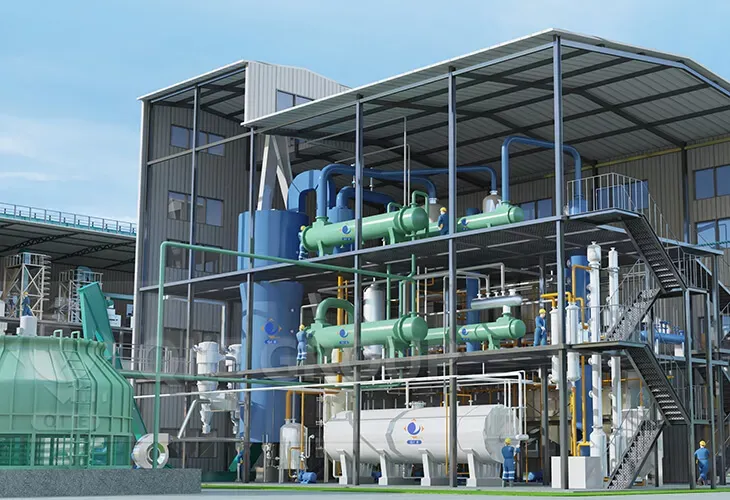
In a solvent extraction plant, the solvent contacts the prepared oilseed material. Solvent wetting, penetration, molecular diffusion, and convective mass transfer support the separation of oil from the material. This method is commonly considered when a larger-scale oil processing solution is required.
- Solvent removal and recovery
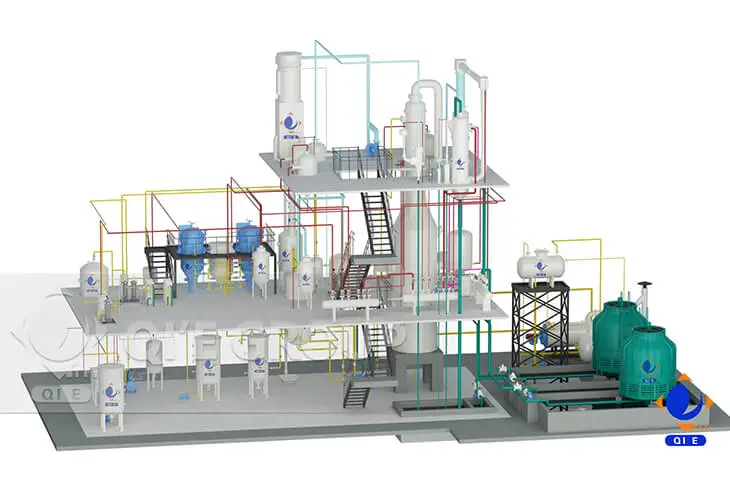
After extraction, the miscella and extracted solids require controlled treatment. Qi'e solvent extraction equipment can be configured with a DTDC system, consisting of a desolventizer, toaster, dryer, and cooler. The system is designed to remove solvent from the meal through desolventizing, toasting, drying, and cooling stages. Condensation and recovery sections help recover evaporated n-hexane for reuse within the process.
- Crude oil treatment
The extracted or pressed oil is handled as crude oil before refining. The treatment arrangement is selected according to the raw material, oil characteristics, and final product requirements. This stage connects the extraction section with the refining section of the production line.
- Vegetable oil refining
Vegetable oil refining equipment is used to process crude oil into an oil product that meets the required quality and application standards. The refining configuration should be determined by the feedstock and the target product, rather than by using the same arrangement for every type of oil.
- Finished oil filling
After the refined oil has been prepared, the final section can be arranged for filling and packaging. Filling equipment and supporting systems should be matched to the product format, packaging requirements, and production workflow.
Pressing or Solvent Extraction: How to Choose
Mechanical pressing and solvent extraction serve different process needs. The selection should consider the oilseed, desired throughput, extraction arrangement, available utilities, and the required downstream treatment.
| Process option |
Main role |
Configuration consideration |
| Mechanical pressing |
Separates oil from prepared oilseed material through mechanical force. |
Suitable equipment depends on the seed type, preparation method, and whether pressing is used alone or before extraction. |
| Solvent extraction |
Uses solvent contact and mass transfer to extract oil from prepared material. |
Requires an integrated extraction, desolventizing, solvent recovery, and related process arrangement. |
| Combined process |
Uses pressing followed by solvent extraction for a coordinated oil recovery process. |
The line should be engineered around feedstock properties, target capacity, and the required oil and meal handling route. |
Oil Solvent Extraction Equipment for Different Capacities
Qi'e provides customized oil solvent extraction plant solutions with stated processing capacities from 30 tons per day to 5,000 tons per day. This range supports different project scales, from smaller commercial operations to large oil processing facilities. The final equipment arrangement should be confirmed after reviewing the raw material, expected daily throughput, process route, site conditions, and utility requirements.
- Raw-material flexibility: The process can be considered for soybeans, sunflower seeds, cottonseed, palm kernels, and other suitable oil-bearing materials.
- Integrated process design: Solutions can cover pretreatment, pressing, solvent extraction, refining, and associated oil processing sections.
- Project-oriented configuration: Equipment selection is based on the intended process and project conditions instead of a one-size-fits-all package.
Key Features of Qi'e Solvent Extraction Solutions
- Wide processing capacity: Options are available for production requirements ranging from 30 to 5,000 tons per day.
- Efficient extraction principle: The system uses solvent wetting, penetration, molecular diffusion, and convective diffusion to support oil extraction.
- DTDC desolventizing system: Desolventizing, toasting, drying, and cooling are integrated to remove solvent from the extracted meal.
- Solvent recovery: Condensation sections recover evaporated n-hexane, which can help reduce solvent consumption, energy use, and operating cost when properly operated.
- Environmental consideration: The equipment design includes arrangements for handling gas emissions and reducing environmental impact during operation.
How to Configure an Edible Oil Production Line
A practical configuration begins with clear project information. Before selecting edible oil production line equipment, buyers should define:
- The type and condition of the oilseed to be processed.
- The required daily processing capacity.
- Whether the process will use pressing, solvent extraction, or a combined route.
- The required crude oil treatment and vegetable oil refining process.
- The desired filling and finished-product arrangement.
- Available site, utilities, environmental management, and operating conditions.
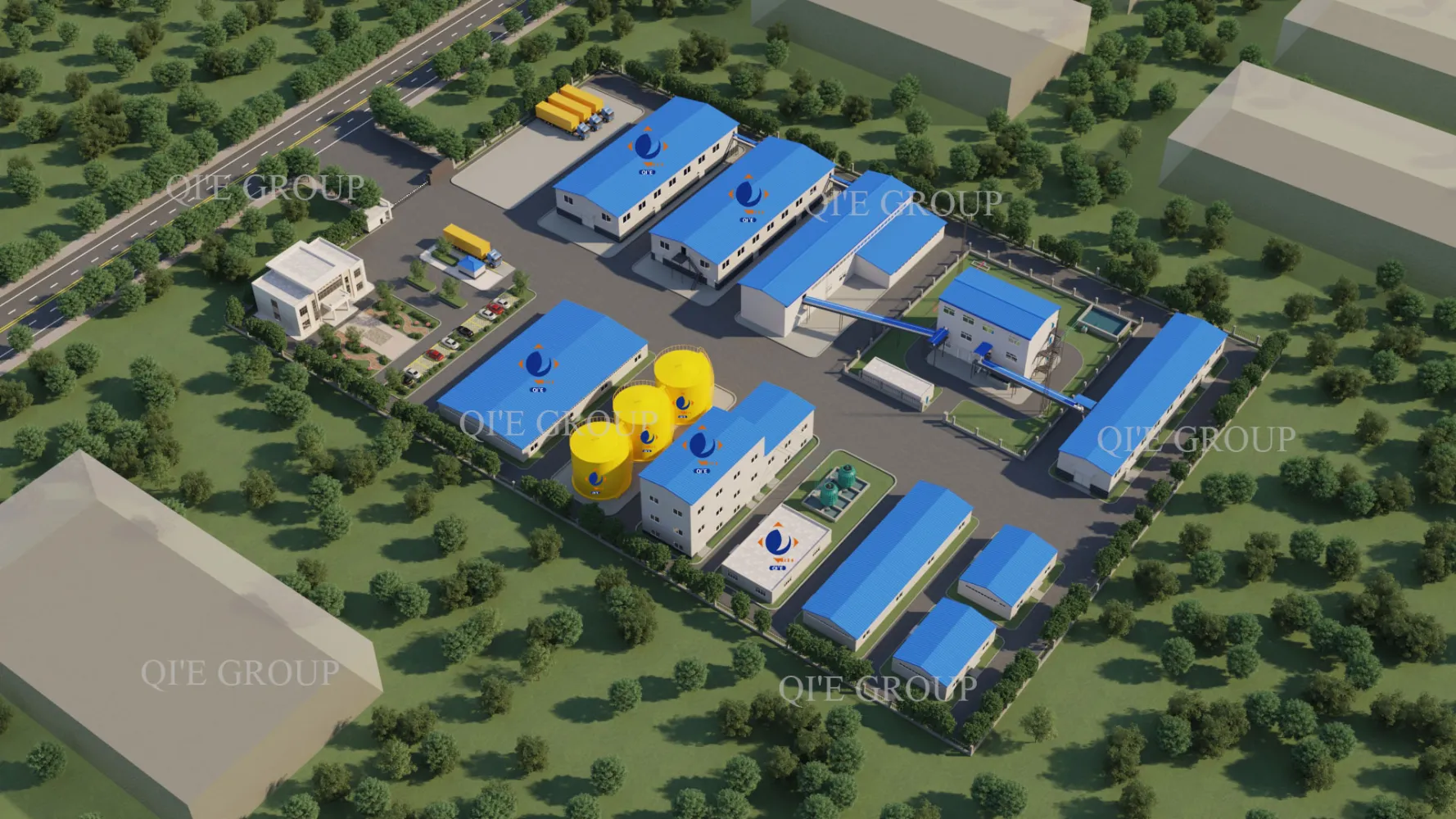
Based on these factors, Qi'e Grain and Oil Machinery Co., Ltd. can support the development of an oil processing solution covering equipment selection, production line design, installation, and technical service. The company serves customers in Asia, Africa, South America, and other international markets, with products exported to more than 120 countries.
A Complete Partner for Oil Processing Projects
From oilseed pretreatment and mechanical pressing to solvent extraction, solvent recovery, crude oil treatment, refining, and filling, an edible oil production line should be planned as one connected process. With experience in oil pressing equipment, oil production line equipment, and oil refining equipment, Qi'e focuses on technology innovation, quality, and service to help B2B customers evaluate and build suitable vegetable oil processing projects.