
Degumming is a crucial pre - treatment step in edible oil refining. Its primary objective is to efficiently remove phospholipids, proteins, and other harmful impurities from crude oil. This not only ensures the smooth progress of subsequent refining processes but also significantly contributes to the high - quality of the final oil product. In the overall edible oil refining process, degumming sets the foundation for the entire production line.
There are various types of impurities in crude oil. Phospholipids, for example, are amphiphilic molecules that can form stable emulsions in oil, making the oil cloudy and affecting its quality. The removal mechanism of degumming mainly relies on the hydrophilicity of phospholipids. When water or acid is added, phospholipids absorb water and form aggregates, which can then be separated from the oil phase.
Hydration degumming is a relatively simple and commonly used method. It involves adding a certain amount of water to the crude oil. The water molecules combine with the hydrophilic groups of phospholipids, causing the phospholipids to swell and aggregate. The aggregated phospholipids can be easily separated by sedimentation or centrifugation. This method is suitable for oils with relatively low phospholipid content, such as some refined soybean oils. The typical water addition amount is about 2% - 5% of the oil weight, and the reaction temperature is usually around 60 - 80°C.
Acid degumming is more effective for removing non - hydratable phospholipids. In this process, acids such as phosphoric acid or citric acid are added to the crude oil. The acid can break the chemical bonds of non - hydratable phospholipids, converting them into hydratable forms. Then, water is added for further separation. Acid degumming is suitable for oils with high non - hydratable phospholipid content, like some palm oils. The acid addition amount is generally about 0.1% - 0.5% of the oil weight, and the reaction temperature is around 70 - 90°C.
| Process | Advantages | Application Scenarios |
|---|---|---|
| Hydration Degumming | Simple operation, low cost | Oils with low phospholipid content |
| Acid Degumming | Effective for non - hydratable phospholipids | Oils with high non - hydratable phospholipid content |
Temperature, pH value, and stirring speed are key parameters in the degumming process. A higher temperature generally accelerates the reaction rate, but it may also cause side reactions. For example, in hydration degumming, if the temperature is too high, the oil may oxidize. The optimal temperature range is usually between 60 - 90°C. The pH value affects the solubility and aggregation of phospholipids. In acid degumming, adjusting the pH value can improve the degumming effect. The stirring speed should be moderate. Too slow a speed may result in uneven mixing, while too fast a speed may break the formed aggregates.
Different oil types have different phospholipid contents and compositions. For soybean oil, which usually has a relatively high phospholipid content, hydration degumming can be used as a preliminary step, followed by acid degumming if necessary. For rapeseed oil, due to its specific phospholipid composition, acid degumming may be more appropriate from the beginning.
| Common Problems | Causes | Solutions |
|---|---|---|
| Incomplete degumming | Insufficient water or acid addition, improper temperature or pH | Adjust the process parameters, increase the addition amount |
| Emulsion formation | Excessive stirring, presence of certain impurities | Reduce stirring speed, add demulsifiers |
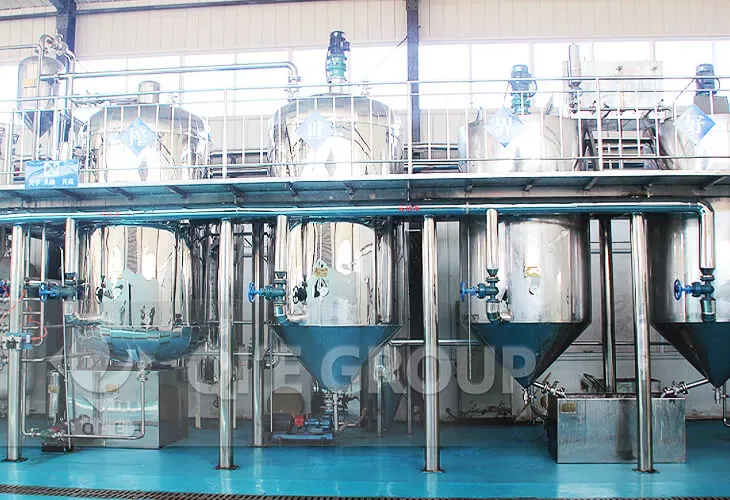
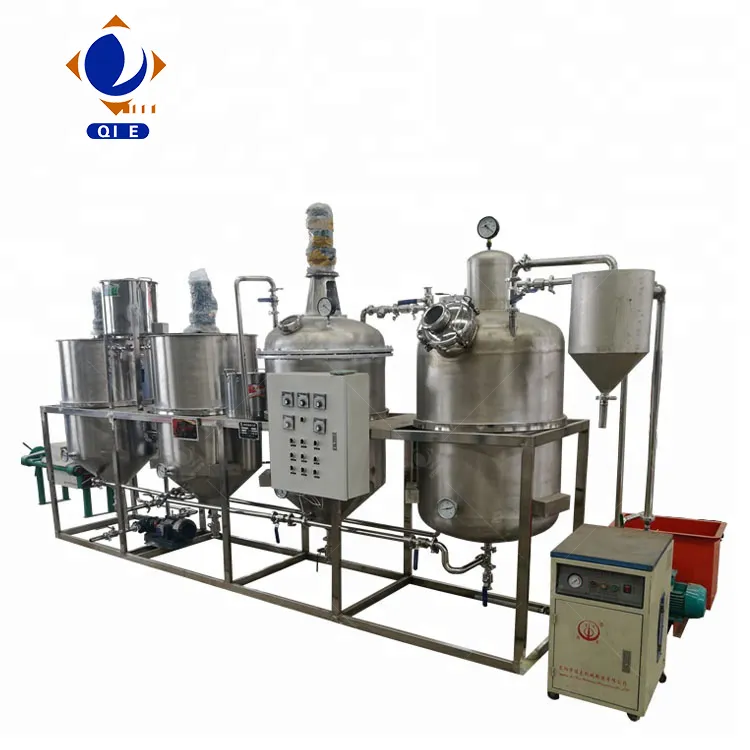
Choosing the advanced refining equipment from QIE Group can significantly enhance the efficiency of the degumming process. With professional technical support, you can achieve a remarkable improvement in edible oil quality, ensuring the safety and stability of production. Upgrade your industry with QIE Group cutting - edge technology.