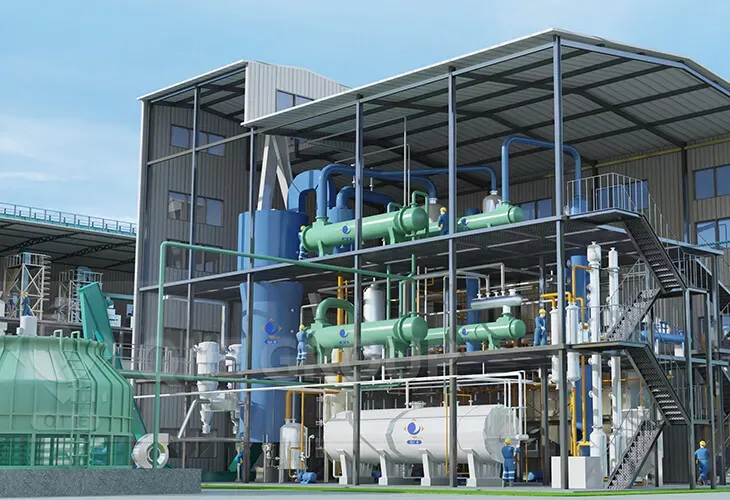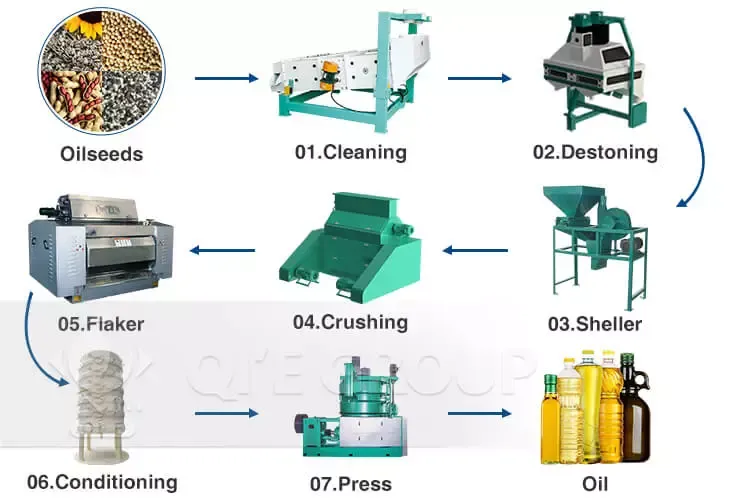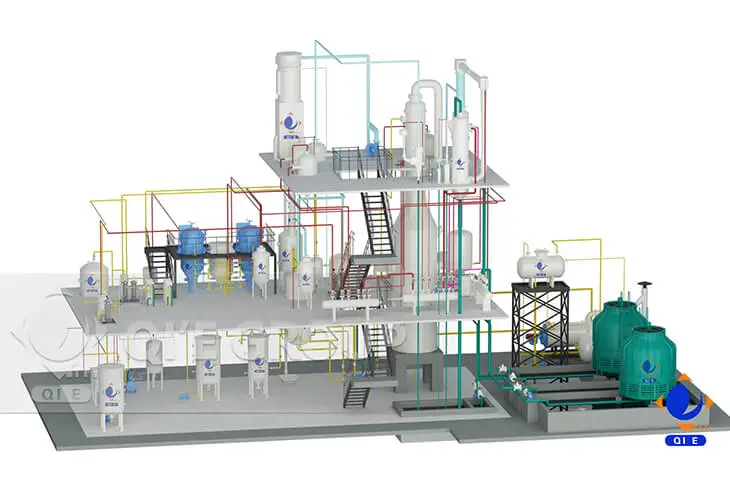
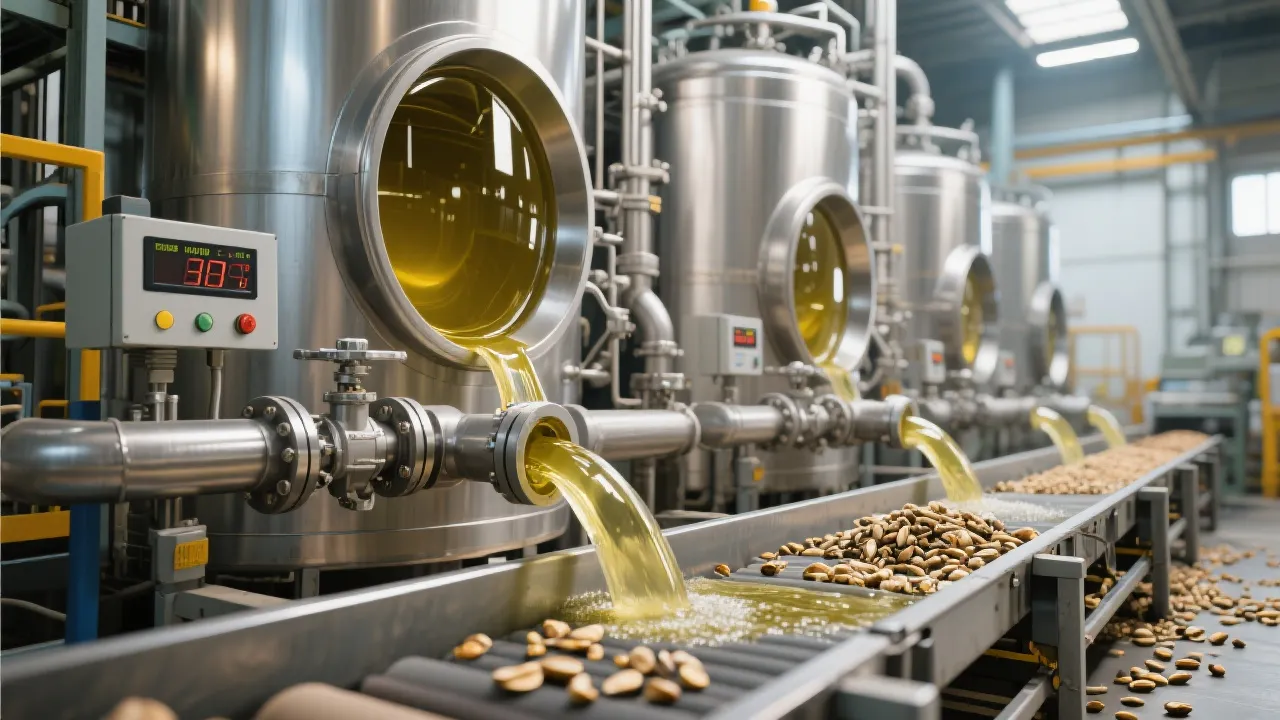
In the field of vegetable oil processing, solvent extraction technology has emerged as a revolutionary approach that significantly enhances extraction efficiency. This article delves deep into the principles, advantages, and practical applications of this technology, offering valuable insights for the oil processing industry.
Solvent extraction technology is based on three core principles: solvent penetration, molecular diffusion, and convective mass transfer. Solvent penetration is the initial step where the solvent permeates the raw material, such as soybeans or sunflower seeds. Molecular diffusion occurs as the oil molecules in the raw material dissolve in the solvent and move from an area of high concentration to an area of low concentration. Convective mass transfer is the process by which the solvent with dissolved oil is transported away from the raw material.
Compared with traditional pressing methods, solvent extraction technology has several distinct advantages. It can achieve higher oil yields and better purity. For example, in the extraction of soybean oil, traditional pressing methods typically yield around 16 - 18% oil, while solvent extraction can increase the yield to 20 - 22%. This is because the solvent can reach the oil molecules that are difficult to extract by pressing alone.
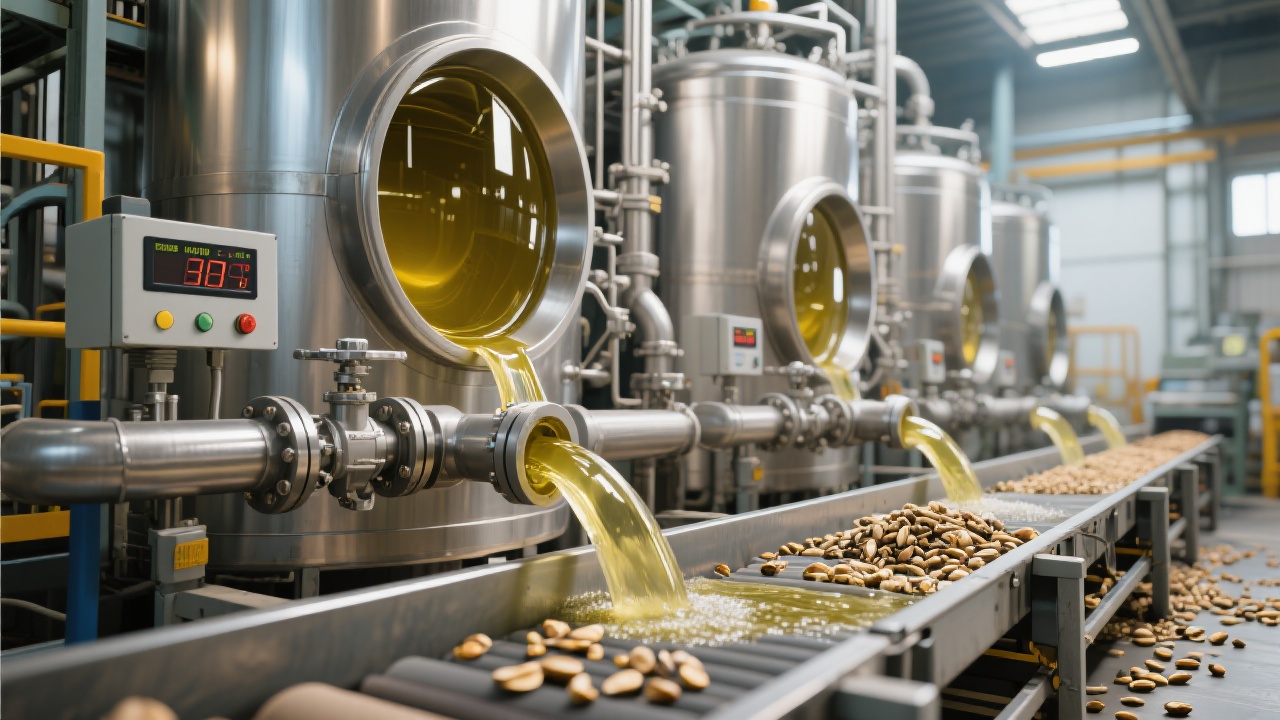
To maximize the efficiency of solvent extraction, it is crucial to optimize key process parameters, including extraction temperature, solvent - to - raw material ratio, and residence time. For soybeans, an extraction temperature of around 50 - 55°C is often recommended. At this temperature, the solvent can penetrate the soybean cells more effectively, and the molecular diffusion rate is also relatively high. If the temperature is too low, the extraction process will be slow; if it is too high, it may cause damage to the oil quality.
The solvent - to - raw material ratio also plays a vital role. For sunflower seeds, a ratio of about 1.5 - 2:1 (solvent: raw material) is commonly used. This ratio ensures sufficient solvent to dissolve the oil while avoiding excessive solvent usage, which can increase costs and environmental pressure. The residence time, which refers to the time the raw material stays in the extraction system, needs to be carefully controlled. Generally, a residence time of 60 - 90 minutes is appropriate for most raw materials, allowing for complete extraction of the oil.
| Raw Material | Optimal Temperature (°C) | Solvent - to - Raw Material Ratio | Residence Time (minutes) |
|---|---|---|---|
| Soybeans | 50 - 55 | 1.2 - 1.5:1 | 60 - 90 |
| Sunflower Seeds | 55 - 60 | 1.5 - 2:1 | 70 - 100 |
Front - line engineers have accumulated a wealth of practical experience in equipment debugging and troubleshooting. One of the key issues in solvent extraction is solvent residue control. Engineers recommend using advanced distillation and evaporation techniques to reduce solvent residue in the final oil product to below 50 ppm, which meets international environmental and safety standards.
Another common problem is equipment fouling. To prevent this, regular cleaning and maintenance of the extraction equipment are necessary. Engineers suggest using chemical cleaning agents at appropriate intervals to remove any deposits on the equipment surfaces. They also emphasize the importance of proper lubrication and inspection of moving parts to ensure the smooth operation of the equipment.
"In my years of experience, careful control of process parameters and regular equipment maintenance are the keys to achieving efficient and stable production. For example, a small adjustment in the extraction temperature can sometimes lead to a significant improvement in oil quality." - An experienced engineer
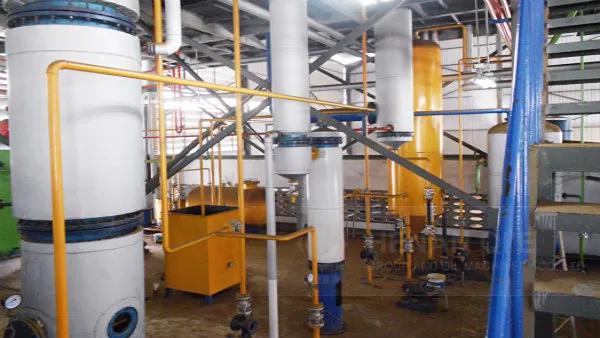
Solvent extraction technology offers a powerful solution for the vegetable oil processing industry to improve extraction efficiency, increase oil yields, and ensure product quality. By understanding the core principles, optimizing process parameters, and learning from the practical experience of front - line engineers, companies can achieve more efficient, stable, and environmentally compliant production.
If you are looking to enhance your vegetable oil extraction process and stay ahead in the industry, click here to learn more about our advanced solvent extraction solutions.