
For oil processing facilities aiming to scale from 30 to 5,000 tons per day, the pre-treatment stage is often the hidden bottleneck that determines whether your solvent extraction system runs smoothly—or fails under pressure. This article dives into critical design parameters, real-world failure cases, and actionable improvements based on over a decade of field experience across Asia, Africa, and Latin America.
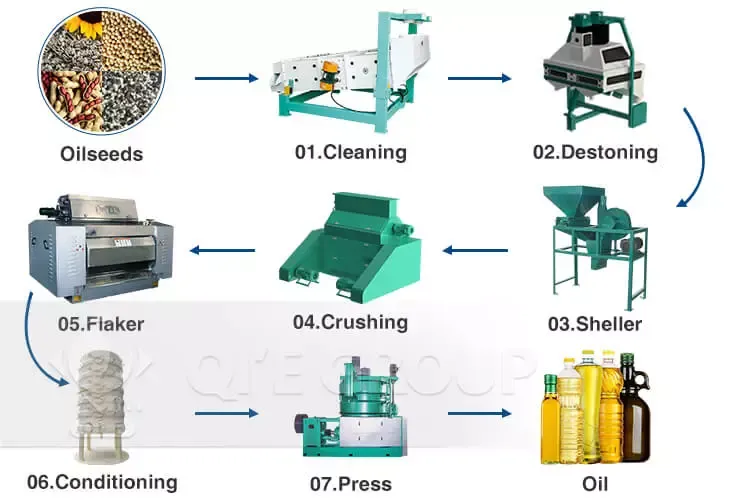
Each pre-treatment step—cleaning, crushing, softening, flaking, and roasting—must be tailored to the specific physical properties of the raw material. For example:
| Process Step | Recommended Parameters (Example) | Critical Impact |
|---|---|---|
| Cleaning | Moisture content ≤ 12%, air velocity 1.2–1.8 m/s | Reduces foreign matter contamination by up to 95% |
| Softening | Temperature: 70–85°C, time: 15–25 min | Improves flake uniformity by 40% vs. uncontrolled softening |
| Roasting | Target moisture loss: 2–4%, temp gradient: 3°C/min | Prevents uneven oil release in extraction units |
A client in India reported inconsistent oil yield and frequent press blockages after scaling to 1,200 tons/day. Our audit revealed two root causes:
We redesigned the crushing mechanism using adjustable rollers and implemented a PLC-controlled heating system. Post-upgrade, oil recovery increased by 6.3%, and downtime dropped from 12 hours/month to less than 2.

Whether you're designing a new plant or upgrading an existing one, understanding how each oilseed behaves under varying conditions is essential. Soybeans, rapeseed, and sesame all require unique adjustments—not just generic settings.
One-size-fits-all systems don’t work in global markets. Our team has helped clients in Nigeria, Argentina, and Vietnam adapt their pre-treatment lines to local feedstock variability—with results ranging from 5% higher yields to 20% lower energy consumption.
If you’re serious about building a reliable, scalable oil production line that meets international standards, let’s talk. We offer full engineering support—from feasibility studies to commissioning—and can tailor every detail to your operational context.