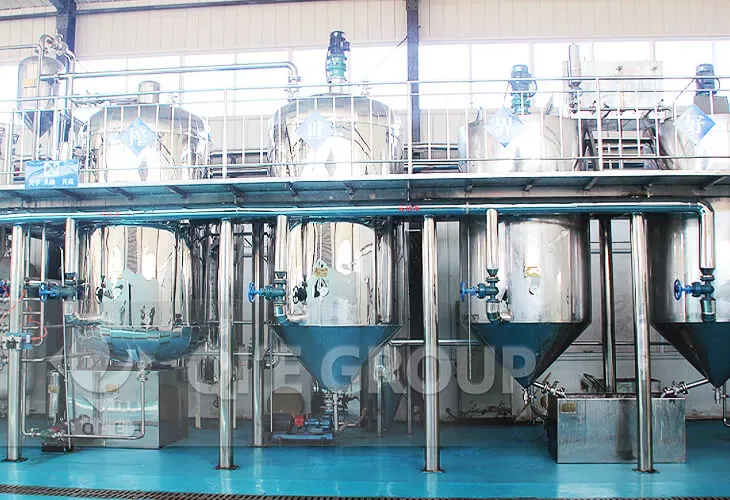
In the competitive world of edible oil refining, cottonseed oil dewaxing is no longer just a technical step—it’s a strategic decision that impacts yield, quality, and sustainability. For many small to mid-scale producers, traditional methods like solvent extraction or conventional cooling crystallization are becoming outdated due to high energy costs, low wax recovery rates, and environmental concerns.
The surface active agent (SAA) method leverages specialized chemical agents that reduce interfacial tension between wax crystals and oil, allowing for more efficient separation during cold treatment. Unlike solvent-based systems that require complex distillation units, SAA processes operate at ambient temperatures with minimal equipment investment—typically reducing capital expenditure by up to 40% compared to solvent methods.
“We switched from solvent dewaxing to SAA in our 5-ton/day plant last year. Wax recovery increased from 78% to over 95%, and we cut electricity use by 30%. It’s not just better—it’s smarter.” — Lin Wei, Technical Manager, Jiangsu Edible Oil Co.
| Method | Energy Use (kWh/kg oil) | Wax Recovery Rate | Environmental Impact |
|---|---|---|---|
| Solvent Method | 1.8–2.2 | 75–82% | High VOC emissions |
| Conventional Cooling | 1.2–1.6 | 65–75% | Moderate water usage |
| Surface Active Agent | 0.6–0.9 | >95% | Low waste, non-toxic |
These real-world figures show why leading processors in China, India, and Southeast Asia are adopting SAA technology—even for premium-grade oils where clarity and purity matter most. The method excels especially when dealing with raw cottonseed oil that has higher free fatty acid content or variable wax profiles.
If your operation faces challenges in consistent wax removal, excessive energy bills, or regulatory pressure on chemical residues, this method may be the missing piece in your process optimization strategy.
Get your personalized dewaxing solution assessment based on your capacity, raw material quality, and market goals.
Download Free Dewaxing Selection Guide PDF